
If you’ve been seeing the term DPSIT pop up lately and wondering what it actually means — you’re not alone. I had the same confusion a while back, and when I finally dug in, I realized it’s one of those concepts that sounds technical on the surface but is actually pretty logical once you break it down.
In this guide, I’m going to walk you through everything: what DPSIT is, how it works, what makes it useful, who’s using it, and what’s changed in 2026. Whether you’re a business owner, a student, or just a curious reader, I promise this will make sense by the end. Let’s get into it.
What Is DPSIT? (And Why Does It Matter?)
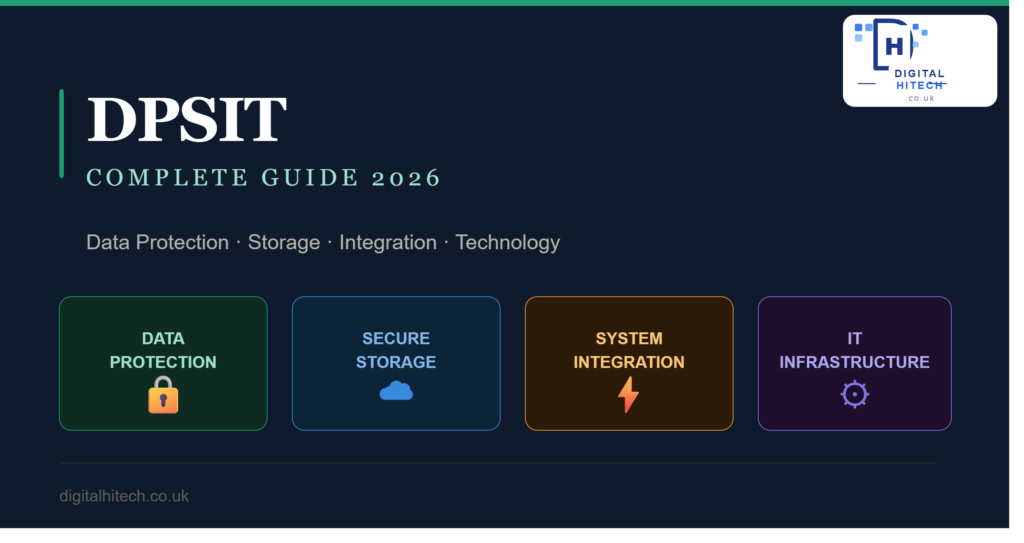
At its core, DPSIT is a modern digital framework that combines data protection, secure storage, system integration, and IT infrastructure into one connected approach. Think of it as the backbone behind how digital systems manage, protect, and move information smoothly.
The term doesn’t have one locked-in definition — it’s flexible. Different industries use it in slightly different ways. But across the board, the core idea stays the same: DPSIT is about making digital data safer, smarter, and more organized.
Some sources also refer to DPSIT as Digital Public Services and Information Technology, a term used in government and civic tech contexts. In that space, it describes how public services — things like renewing a license, filing a form, or accessing health records — move online in a secure and efficient way.
The short version? If data is flowing, being stored, getting processed, or being kept safe somewhere, DPSIT is likely involved behind the scenes.
The 4 Core Pillars of DPSIT
I find it easiest to think of DPSIT as a four-part framework. Each part plays its own role, and together they form a system that’s greater than the sum of its parts.
1. Data Protection
This is the foundation. Data protection in DPSIT means keeping sensitive information safe from hackers, accidental leaks, or unauthorized access. It uses encryption, access controls, and compliance standards (like GDPR) to make sure that only the right people see the right data.
For a hospital, this means patient records stay private. For a bank, it means your financial history doesn’t fall into the wrong hands.
2. Secure Storage
Once data is protected, it needs a home. DPSIT emphasizes smart storage — whether that’s in cloud systems, on-premise servers, or hybrid setups. The goal is to keep data accessible when you need it and recoverable if something goes wrong.
Cloud storage in particular has become a big part of this, since it’s scalable, cost-effective, and doesn’t require a room full of physical hardware.
3. System Integration
This is where things get really interesting. Integration means connecting different platforms and tools so they can “talk” to each other. An HR system sharing data with a payroll tool. A student portal syncing with a school’s records database. An e-commerce platform connecting to a logistics tracker.
DPSIT makes those connections reliable and secure, so information flows without bottlenecks or errors.
4. IT Infrastructure & Technology
The final pillar is the underlying tech — the networks, devices, servers, and software that support everything else. A DPSIT framework only works if the physical and digital infrastructure underneath it is solid.
This includes things like cybersecurity monitoring tools, backup systems, and IT management solutions.
Key Features of DPSIT in 2026
The DPSIT landscape has evolved quite a bit recently. Here’s what stands out this year:
- AI-driven threat detection — Many DPSIT systems now use machine learning to spot unusual patterns in data access before they become security incidents.
- Real-time dashboards — Stakeholders can view live data flows, system health, and compliance status all in one place.
- API-first integration — Modern DPSIT frameworks prioritize API connections, making it easier to plug in new tools without breaking existing ones.
- Blockchain verification — Some cutting-edge implementations use blockchain to create tamper-proof data logs, especially useful in finance and healthcare.
- Automated compliance reporting — Instead of manual audits, DPSIT systems can generate compliance reports automatically, saving hours of work.
Real-World Uses of DPSIT
This is where it gets practical. DPSIT isn’t just a concept — it’s being used every single day across dozens of industries.
In Healthcare
Hospitals and clinics use DPSIT to manage patient records securely, share data between departments, and comply with health data privacy laws. When a doctor in one department can instantly (and safely) pull up your history from another, that’s DPSIT doing its job.
In Education
Schools and universities use DPSIT to manage student records, run secure online exams, and connect learning management systems with administrative databases. Countries like Estonia have gone almost entirely digital with public services — and DPSIT principles are at the heart of it.
In Business & Finance
From tracking transactions to managing customer data, businesses rely on DPSIT-style frameworks every day. It reduces manual errors, speeds up processes, and makes sure that sensitive financial data stays locked down.
In Government
The idea of DPSIT as “Digital Public Services and Information Technology” is gaining traction worldwide. India’s Digital India initiative and Singapore’s Smart Nation program are great examples of large-scale DPSIT implementation that’s improving citizen services dramatically.
Benefits of DPSIT: Why Should You Care?
Honestly, when I first encountered DPSIT, I wasn’t sure it was relevant to me — I’m not running a hospital or a government agency. But the more I looked into it, the more I realized that the benefits trickle down to everyday users too.
Here’s a quick breakdown:
- Better security – Your data is less likely to be compromised when the system managing it follows solid DPSIT principles.
- Faster processes – Automation and integration cut out the slow, error-prone manual steps.
- Smarter decisions – Clean, connected data helps leaders and teams act on accurate information, not guesswork.
- Cost savings – Fewer manual errors and less downtime mean less money wasted.
- Regulatory compliance – Organizations avoid fines and legal issues by staying within the framework’s compliance guardrails.
- Scalability – As an organization grows, a DPSIT framework grows with it — no need to rebuild from scratch.
For small businesses especially, even a partial DPSIT approach can make a significant difference in daily efficiency and customer trust.
Challenges to Watch Out For
No framework is perfect, and DPSIT has its own set of hurdles.
The biggest one I see mentioned over and over? Team adoption. Even the most technically sound system fails if the people using it don’t understand it or resist the change.
Other common challenges include:
- High upfront cost for full implementation, especially for smaller organizations
- Legacy system compatibility — older tech doesn’t always play nice with modern integration tools
- Data governance complexity — managing who owns what data, and who can see it, gets complicated fast
- Ongoing maintenance — DPSIT systems need regular updates to stay secure and functional
The good news is that many vendors now offer modular DPSIT solutions, so organizations can start small and scale gradually.
DPSIT vs. Traditional IT Management
Here’s a simple way to think about it. Traditional IT management often treats data protection, storage, and system management as separate silos. You’ve got one team for security, another for storage, another for integrations.
DPSIT says: what if all of that worked together?
It’s a more holistic, unified approach that reduces gaps between departments and makes the whole system more resilient. It’s less “fix problems when they happen” and more “design the system so problems don’t happen in the first place.”
Latest DPSIT Updates in 2026
A few things have shifted in the DPSIT space this year that are worth knowing about:
- AI integration is accelerating. More DPSIT platforms are embedding AI tools for predictive analysis and automated incident response.
- Smart city expansion. Urban infrastructure — traffic systems, public WiFi, civic databases — is increasingly being built on DPSIT principles.
- Stronger compliance requirements. With data regulations tightening in the EU, US, and Asia, DPSIT frameworks are being updated to reflect new rules.
- Zero Trust security models are becoming a standard part of DPSIT implementation, meaning no user or system is trusted by default, even inside the network.
How to Get Started with DPSIT (Practical Steps)
If you’re thinking about implementing DPSIT — whether for your business, your school, or a project you’re working on — here’s a practical starting point:
- Audit your current data setup. What data do you have? Where is it stored? Who has access?
- Identify weak spots. Look for gaps in security, siloed systems that don’t communicate, or manual processes prone to errors.
- Set your priorities. Do you need better data protection first? Smarter storage? Better integration?
- Choose modular tools. Don’t try to overhaul everything at once. Start with one pillar — often security or storage — and expand from there.
- Train your team. Technical implementation only works if people know how to use it. Invest in training early.
- Monitor and iterate. DPSIT isn’t a one-time setup. Review performance regularly and update as your needs evolve.
My Take on DPSIT
I’ll be real with you — when I started researching this, I expected to find a clear-cut product or software tool. What I found instead was something more interesting: a philosophy for how digital systems should work.
DPSIT isn’t a magic product you install and forget. It’s an approach — a way of thinking about data that prioritizes security, efficiency, and connectivity from the ground up. And in a world where data breaches make headlines every week, that kind of thinking matters more than ever.
Whether you’re a solo entrepreneur, a corporate IT manager, or just someone who cares about their digital privacy, the principles behind DPSIT are worth understanding.
Conclusion: Is DPSIT Worth Your Attention?
Absolutely — yes. DPSIT represents one of the most practical and forward-thinking approaches to managing digital information in 2026. It’s not just for large enterprises. Its core ideas — protecting data, storing it smartly, integrating systems, and building solid infrastructure — apply to organizations of every size.
If you’re building a business, managing a team, or just thinking more carefully about how your data is handled, DPSIT gives you a solid framework to work from.
For More Tech Updates, Visit DigitalHiTech.co.uk